
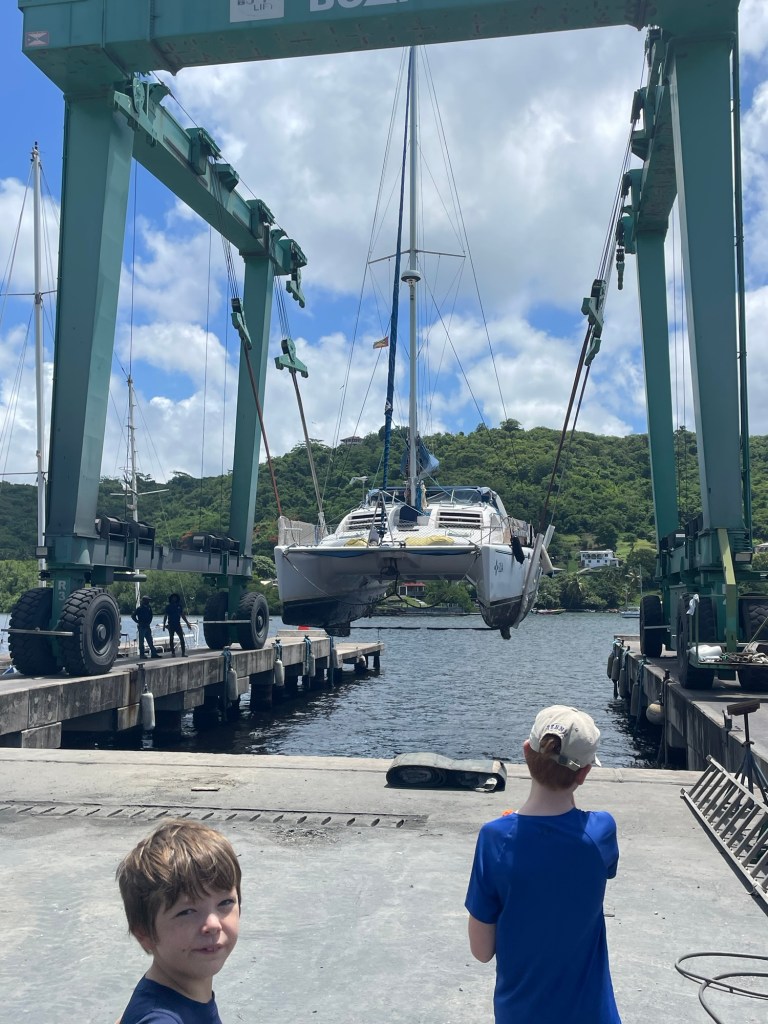
Boats tend to need to be pulled out of the water every few years for bottom paint and other repairs, and Zia was definitely due for some love under the water line. This was our second time hauling her out (the first being shortly after purchase) and I can safely say that it never gets less scary to see your home suspended in midair by some straps! We chose to live aboard for the 3+weeks while she is on the hard (or rather, I lost the argument so we are staying aboard.)
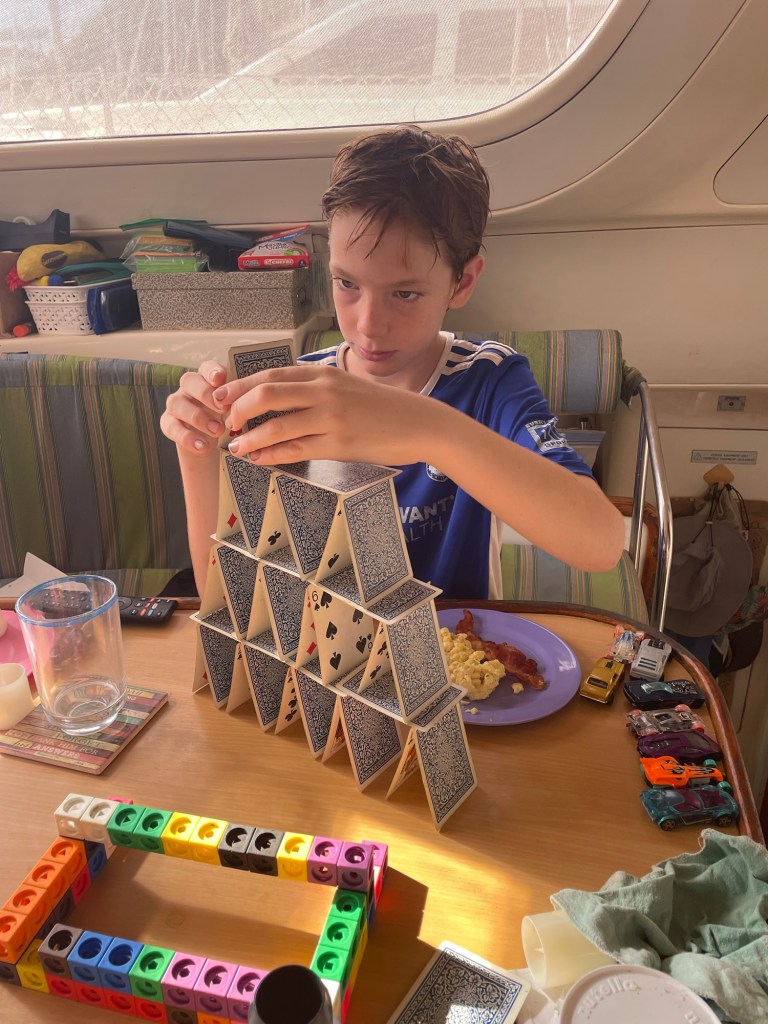
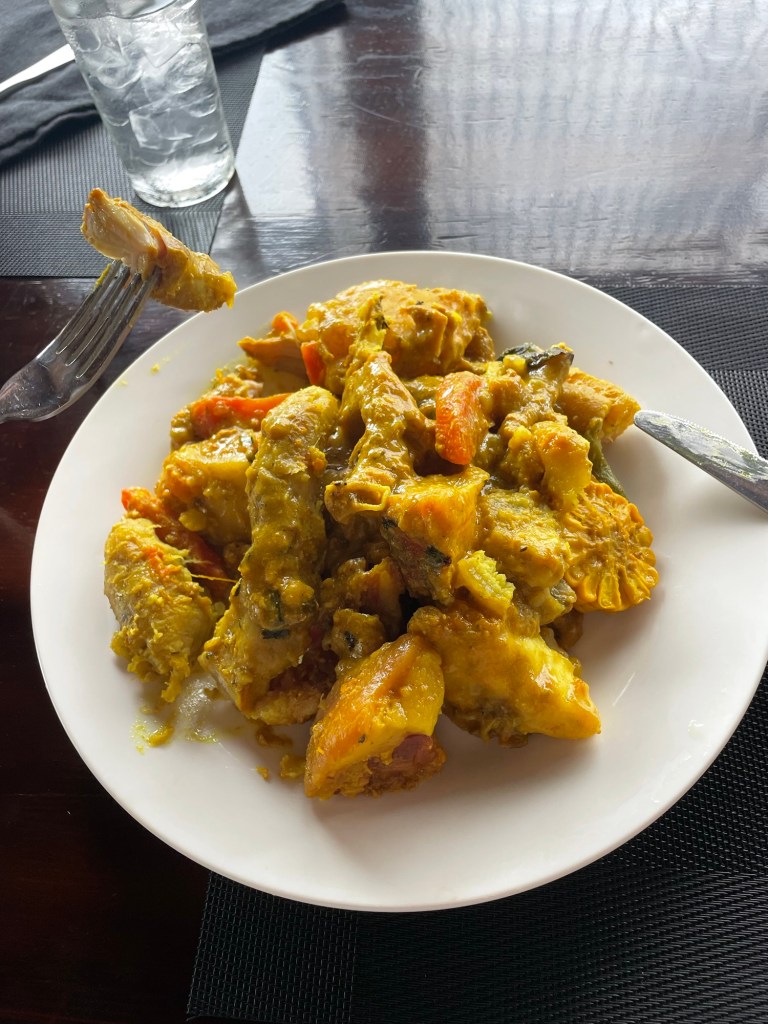
In an effort to find something positive to say about living on the hard, there is a doubles lady who sells Trinidadian doubles, aloo pies, and roti out of the back of her van. They are delicious! We also can take daily showers, have unlimited water and power, and the boys were able to build card towers for probably the only time on our salon table.
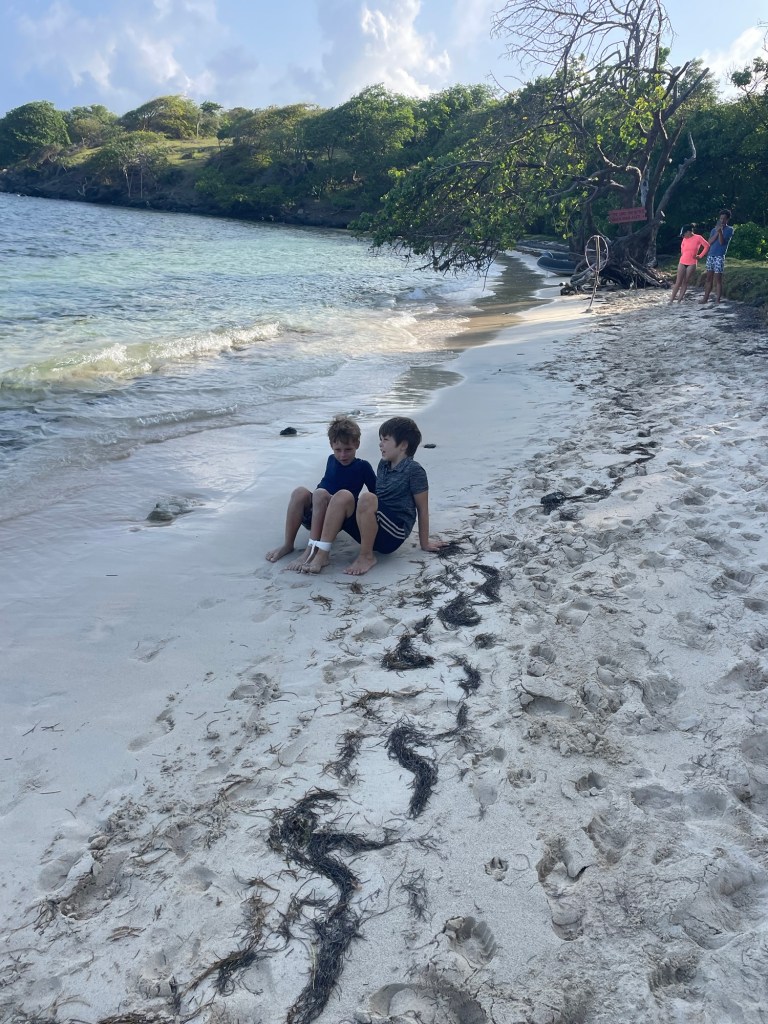
Otherwise, living on the hard has been ROUGH. It’s like a thousand degrees on the boat, our beloved sea breeze is blocked by a cliff face on one side and several rows of gigantic catamarans on the other, and the mosquitos are abundant and thirsty. We actually rented a portable air conditioning unit (which is the first time in two years in the tropics that we’ve ever felt like we needed ac,) but unfortunately there really isn’t a good place to put it on our little boat so it only cools one hallway and Neal and my room. And we have to turn it off everytime a power tool is needed, or the instant pot, or the kids want to toast a bagel.
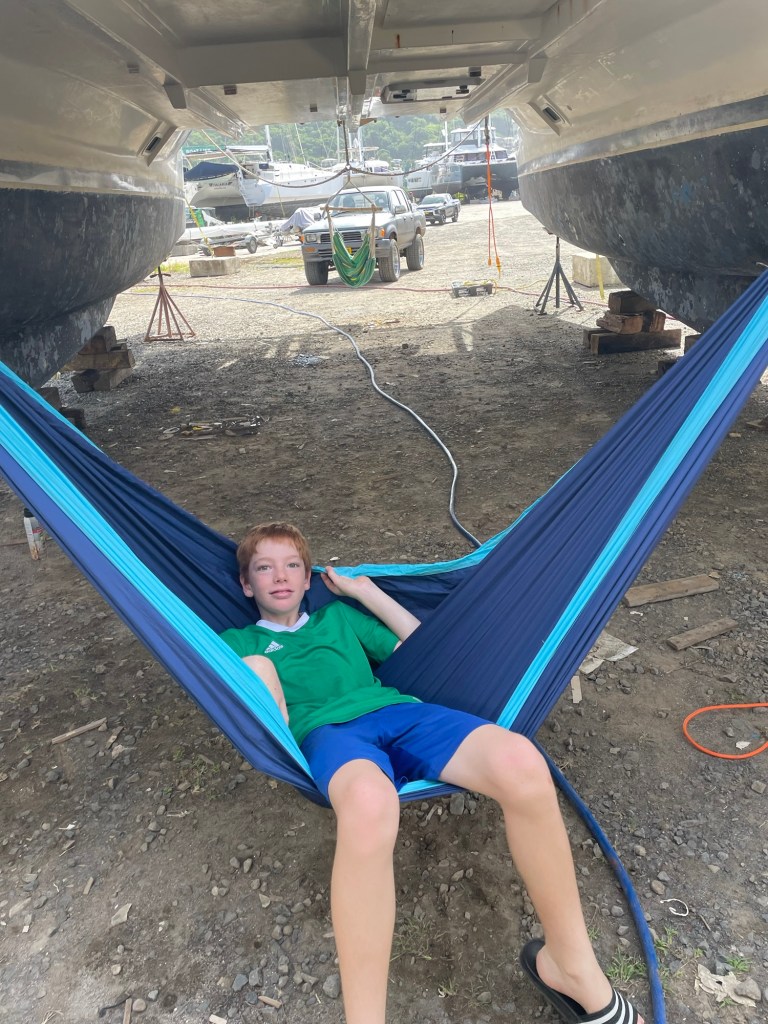
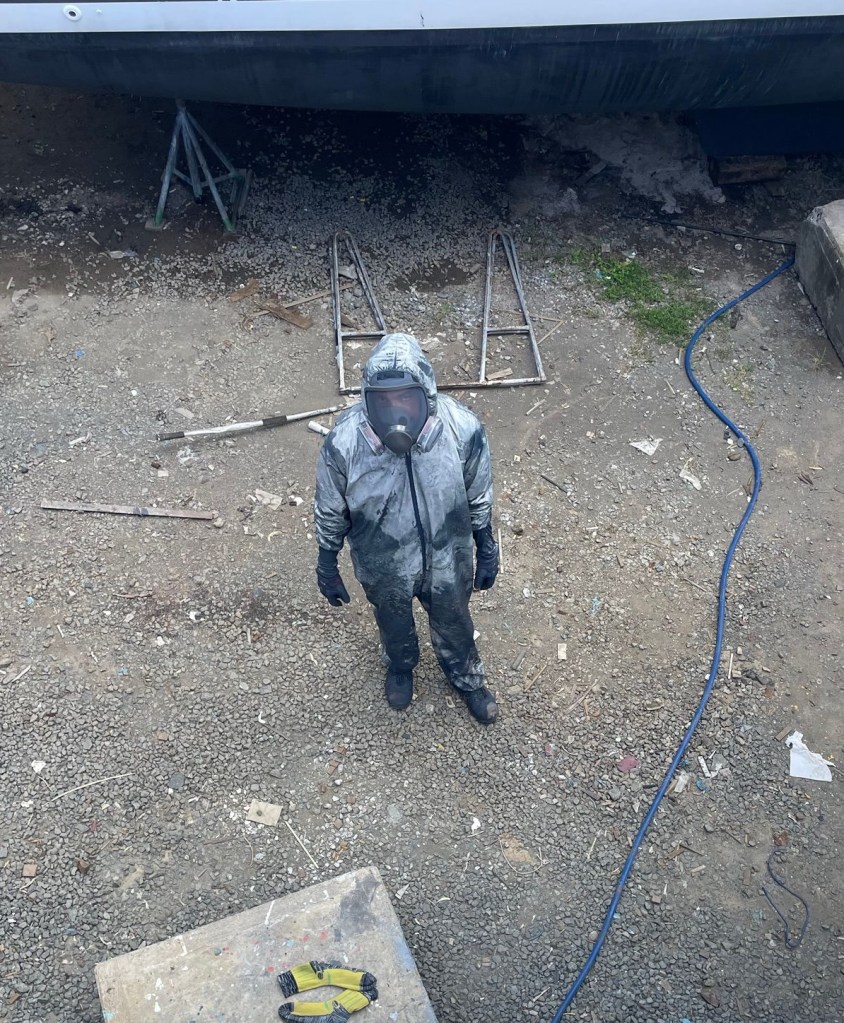
We had several projects on the list for these weeks. The first was bottom paint, which would’ve been needed no matter where we were headed next season. The last time Zia’s bottom was painted was in the yard in North Carolina right before we moved aboard. They didn’t really allow sanding there, so it was a quick and dirty application of ablative paint just to see us through until we could get to a spot that would allow a more thorough bottom job. Thankfully that paint lasted pretty well for 2 years!
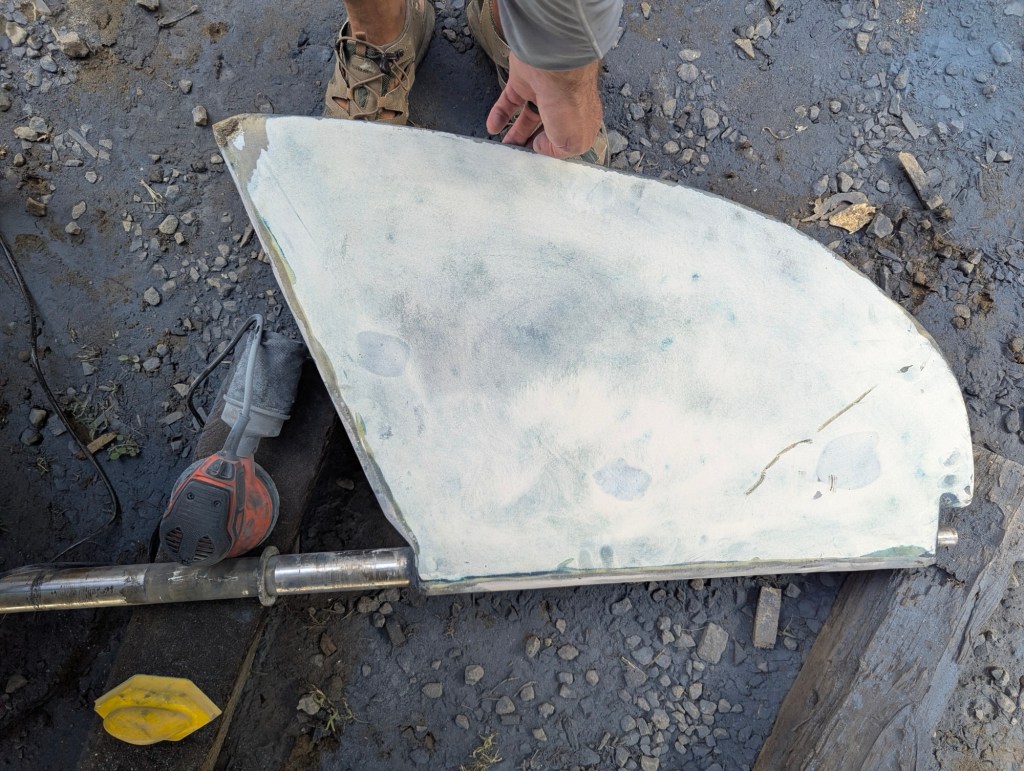
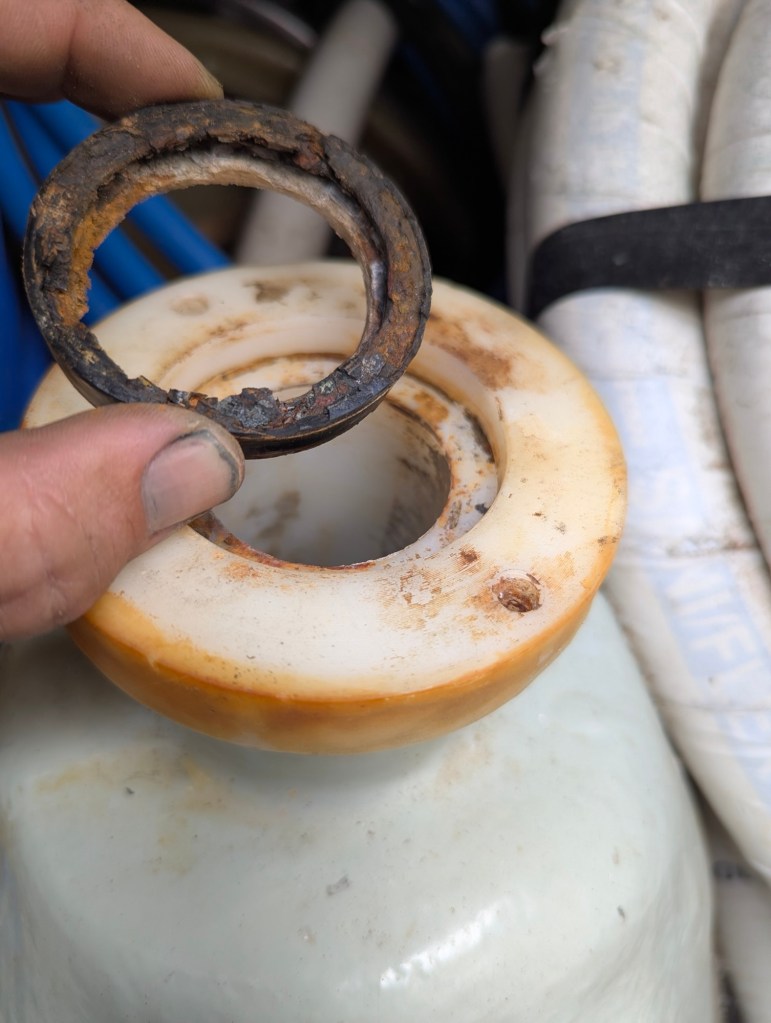
Another big project we wanted to tackle while on the hard was dropping our rudders. We’ve never done this before, and wanted to check on the integrity of the rudder stocks (the long metal bar that attaches the rudders to the boat) and other interior workings. We have multiple friends who have lost rudders this season, usually while on a big passage to somewhere inconvenient to get work done, because the rudder stock was corroded from the inside out. Even while in the boatyard, a friend on a Leopard 46 pulled theirs and the pitting on their stock was so bad they could push a screwdriver right through the metal! Thankfully our rudder stocks were solid and had no evidence of pitting. The rudders themselves needed a bit of bulking up here and there in the fiberglass, and there were some seals that totally disintegrated in our hands and will need to be replaced. Otherwise, it was good news!
The last major project we had to tackle (plus a thousand little ones) was a few squishy spots in our back deck. Above the waterline our boat was constructed with a balsa core sandwiched between fiberglass. The balsa core lends strength without adding a ton of weight, and many production boats are made this way. Unfortunately, a squishy deck usually means that the balsa core has had water intrusion and is rotting, so this project terrified me. We’ve heard horror stories of people having to rip up their entire boat because the rot just continues to spread. We paid a fiberglass guy to come and work on it and when he cut and lifted up the first piece of our deck, there was nothing underneath! Literally nothing. It looked like there had been a wooden support beam that basically just floated to provide some support in that area that had been dislodged, but the deck itself was just fiberglass. It was squishy because it wasn’t quite enough fiberglass to solidly support our weight while walking on it, so the fiberglass was flexing. This ended up being the same everywhere we had concerns, which was actually a huge blessing. The work was still expensive, but he was able to simply bulk up the fiberglass to make it stronger instead of the nightmare rotten core scenario we had feared.
Our 25 days in the boatyard thankfully ends today, and we could not be more ready to have our home back in her natural environment. We’re all looking forward to feeling the sea breeze again and getting back into our usual routines.


Leave a Reply